
We may earn money or products from the companies mentioned in this post.
You’ve probably looked at that baby activity gym sitting in your living room and wondered how exactly it’s supposed to help with tummy time.
Quick answer
Use the activity gym for short, supervised tummy-time sessions with your baby awake and positioned on their stomach. Place one or two toys near eye level, start with a few comfortable minutes, and adjust the setup as head control improves.
Continue with a related guide:
Activity gyms to consider
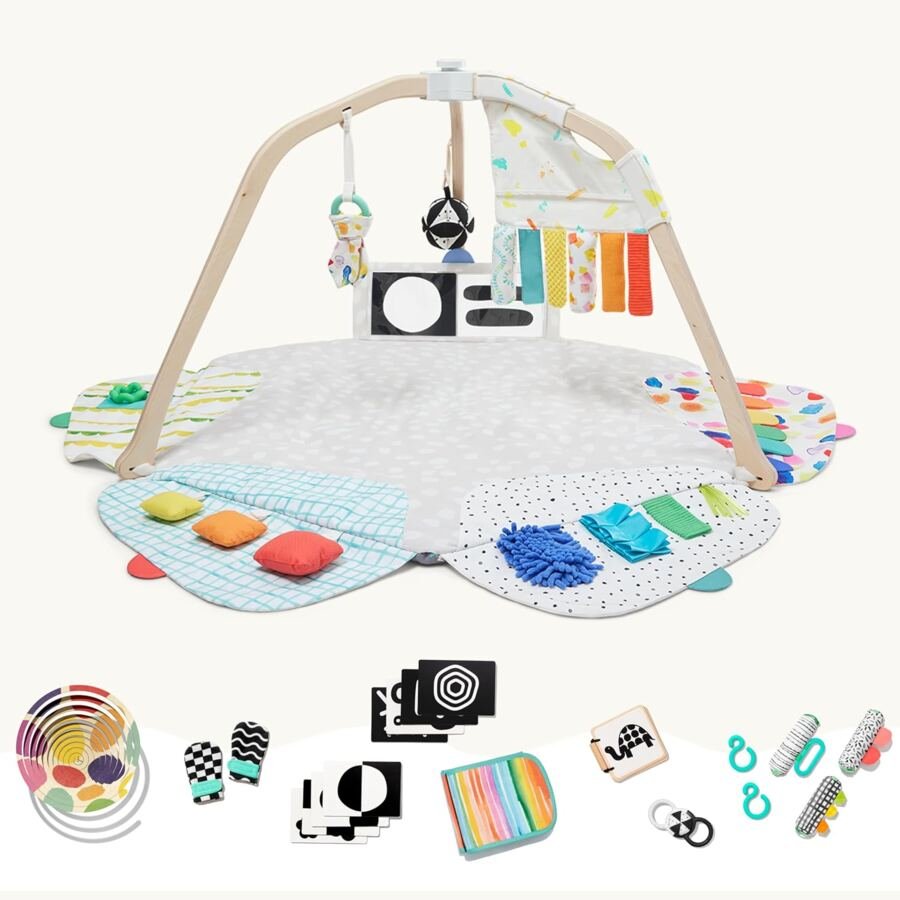
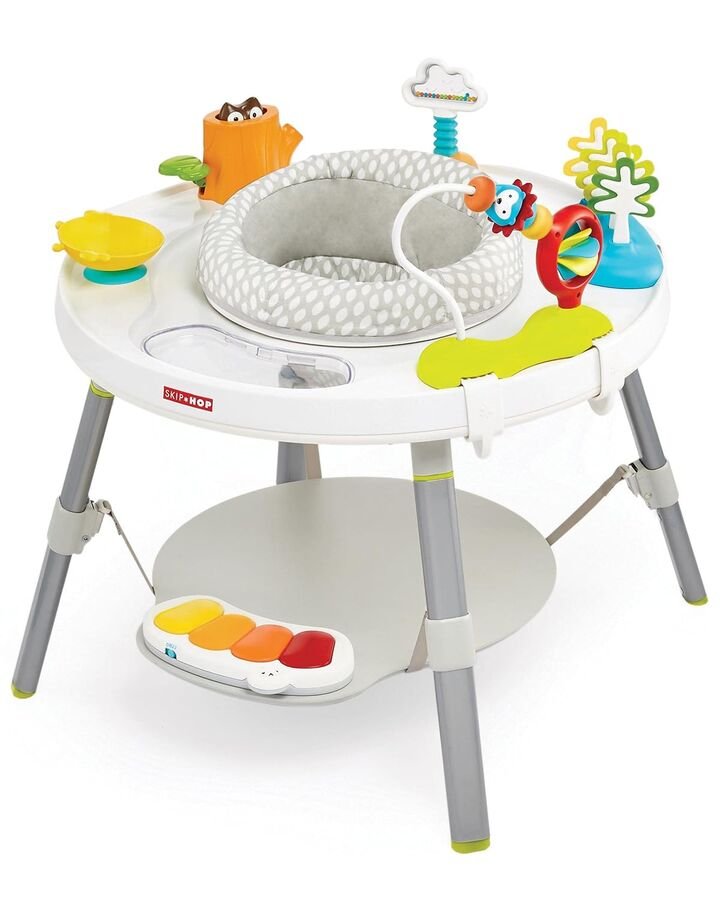
If you still need a tummy-time setup, compare the Lovevery Play Gym with the Skip Hop 3-Stage Activity Center. Both give you a padded play area with hanging activities you can reposition as your baby develops.
I get it completely. When I first started researching baby development tools, I thought activity gyms were just fancy entertainment devices.
But when used correctly, these colorful contraptions can actually transform tummy time from a dreaded daily struggle into something your baby genuinely enjoys.
The problem is that most parents don’t realize there’s actually a strategic way to use these gyms for most developmental benefit. They either plop their baby down randomly or skip the gym altogether because their little one fusses during floor time.
Want to make tummy time more effective and enjoyable for your baby? In this article, you’ll uncover exactly how to use a baby activity gym to support your infant’s physical development, the science behind why it works, and how to adapt your approach as your baby grows.
Understanding Baby Activity Gyms and Tummy Time
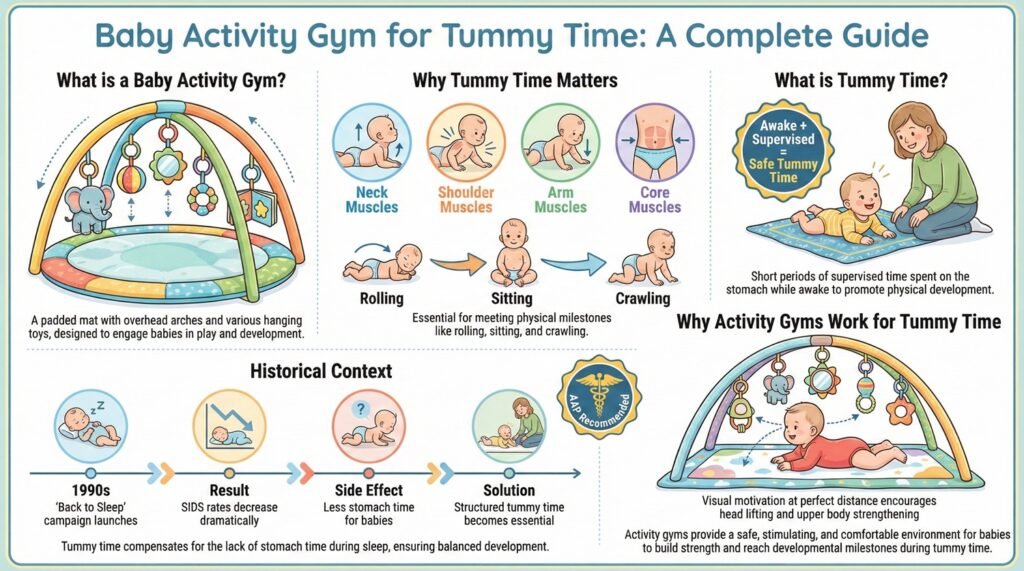
Baby activity gyms are essentially padded mats with an overhead arch structure that holds hanging toys at various heights. They come in different designs, but the core concept stays the same: creating an engaging environment that encourages babies to explore their physical capabilities.
Tummy time refers to the practice of placing your baby on their stomach while they’re awake and supervised. This simple activity is actually crucial for developing the neck, shoulder, arm, and core muscles that babies need for rolling over, sitting up, and eventually crawling. The American Academy of Pediatrics has been recommending tummy time since the “Back to Sleep” campaign began in the 1990s, which dramatically reduced SIDS rates and meant babies spent significantly less time on their stomachs.
The connection between activity gyms and tummy time might not seem obvious at first. After all, many parents think these gyms are designed primarily for back play.
But what makes them particularly valuable for tummy time is that they provide visual motivation at exactly the right height and distance to encourage babies to lift their heads and strengthen their upper bodies.
When a baby is on their tummy under an activity gym, those dangling toys become targets. The natural instinct to reach for colorful, interesting objects drives babies to push up on their arms, turn their heads from side to side, and eventually start pivoting and scooting.
This self-motivated movement is far more effective than passive positioning because the baby is actively engaging their muscles rather than simply tolerating an uncomfortable position.
The theoretical foundation here is based on developmental psychology and motor learning principles. Babies learn through repetition and reward.
When tummy time feels like punishment, they associate the position with discomfort and resist it.
But when there’s something interesting to look at or reach for, the same position becomes an opportunity for discovery. The activity gym essentially reframes tummy time from an obligation into an invitation to explore.
The Challenge of Traditional Tummy Time
Many parents struggle with tummy time because babies often cry or seem frustrated when placed on their stomachs. This resistance isn’t stubbornness.
The position is genuinely challenging for infants who haven’t yet developed the necessary strength.
Their heads are proportionally heavy, and holding that weight up needs significant muscular effort.
The common approach of placing a baby on a blank mat or blanket on the floor doesn’t give them much reason to do that hard work. Without visual or tactile motivation directly in front of them, they have little incentive to lift their heads or push up on their arms.
This is where the activity gym changes everything.
Setting Up Your Activity Gym for Tummy Time Success
The way you position and configure your baby’s activity gym makes a massive difference in how effective it is for tummy time. I’ve seen parents make the mistake of setting up the gym once and never adjusting it, which means they’re missing out on the developmental benefits that come from customizing the setup for their baby’s current abilities.
Start by choosing the right location. You want a firm, flat surface.
The floor is ideal, though a very firm mattress can work for young infants if you’re supervising closely.
Avoid placing the gym on soft surfaces like beds or couches, as these make it harder for babies to push up and also pose safety risks.
The mat itself should be positioned where you can easily supervise while going about other activities. I typically recommend setting it up in a room where you spend considerable time, like the living room or a corner of your bedroom.
Babies are more willing to practice skills when they can see their caregivers nearby.
Now here’s where it gets really interesting. The height and positioning of those hanging toys matter tremendously.
For newborns just starting tummy time, you want toys positioned slightly forward and lower, so they can see them without having to lift their heads very high.
This creates immediate visual reward for even minimal head lifting.
As your baby gets stronger, you’ll gradually raise the toys higher, which forces them to push up more on their arms and lift their chest off the mat.
The toys themselves should offer high contrast and interesting textures. Newborns see best at about eight to twelve inches away and respond most strongly to black-and-white patterns or bold primary colors.
Position mirrors at an angle where your baby can see their own reflection when they lift their head. Babies are naturally fascinated by faces, even their own.
Consider the sensory experience beyond just visual stimulation. Some activity gyms include toys that make gentle sounds when batted or kicked. These auditory cues help babies understand cause and effect while also encouraging them to reach and grasp.
Toys with different textures, crinkly fabric, smooth plastic, soft plush, give babies varied tactile experiences that support sensory development.
Adjusting for Your Baby’s Age and Ability
A newborn’s needs are vastly different from a three-month-old’s, and your setup should reflect that. For babies under six weeks, keep everything simple.
Lower the toys significantly, maybe even so they’re just brushing the mat, and limit the session to just a few minutes.
At this stage, you’re building positive associations more than muscle strength.
Around two to three months, most babies can lift their heads at a forty-five-degree angle. This is when you start raising those toys higher and positioning them slightly further forward.
Now your baby has to work a bit harder to see and reach them.
You can also start introducing toys that need interaction, like ones that spin or make noise when touched.
By four to five months, many babies can push up on their forearms and even start reaching for objects while on their tummies. Your activity gym setup should now include toys at varying heights.
Some should be low enough to actually grasp, others higher up that encourage reaching and batting.
This is also when you might start positioning some toys to the sides, which encourages babies to turn their heads and eventually start pivoting their bodies.
Implementing a Progressive Tummy Time Routine
The key to successful tummy time with an activity gym is starting gradually and building up duration and difficulty over time. I’ve found that parents who try to do too much too soon end up with frustrated babies who resist tummy time altogether.
For the first few weeks, aim for just three to five minutes of tummy time, two to three times per day. Position your baby under the activity gym when they’re alert and content.
Never right after feeding, when they might spit up, or when they’re tired and cranky.
The best times are usually after a diaper change or after a short nap when babies are refreshed but not yet hungry.
Start each session by getting down on the floor yourself. Your face is the most interesting thing in your baby’s world, so position yourself where they can see you when they lift their head.
Talk to them, sing, make encouraging sounds.
This personal interaction combined with the visual interest of the toys creates a rich, motivating environment.
As your baby lifts their head, even for just a few seconds, offer enthusiastic praise. Babies respond incredibly well to positive reinforcement, and your excitement tells them they’re doing something worth repeating.
Point to the toys, gently bat them so they move, and encourage your baby to track the movement with their eyes.
Watch for signs of fatigue. If your baby starts fussing, their head drops down repeatedly, or they seem frustrated, end the session.
You want to finish while the experience is still positive.
Over time, gradually increase the duration by one or two minutes every few days.
By three months, many babies can handle fifteen to twenty minutes of added tummy time throughout the day.
Creating Variety Within the Structure
Even with an activity gym, doing the exact same thing every session gets boring for babies. They’re learning machines that thrive on novelty.
Every few days, switch out which toys are hanging from the arch.
Many activity gyms come with many toy options, and you can also add your own if they attach securely.
Change your baby’s orientation under the gym sometimes. Instead of always positioning them facing the same direction, rotate them ninety degrees so they’re looking at the toys from a different angle.
This simple change provides new visual perspectives and encourages them to use different muscle groups.
Try the “supported tummy time” variation where you roll a small towel or nursing pillow and place it under your baby’s chest and armpits. This props them up slightly, making it easier to see the toys and reducing the physical demand.
It’s particularly helpful for younger babies or those who are resistant to flat tummy time.
As they get stronger, gradually reduce the height of the support.
Some days, remove all the toys except one favorite. This focused attention can actually be more engaging than having too many options, and it encourages sustained reaching and grasping tries.
Other days, add something completely new, a small handheld toy placed just within reach, or a small board book propped open showing high-contrast images.
Addressing Common Obstacles
The most frequent complaint I hear is that babies cry immediately when placed on their tummies. If this is happening with your baby, you’re probably starting with sessions that are too long or at times when your baby isn’t in the right state.
Scale back to literally thirty seconds if needed. Success breeds success, so even very brief positive experiences will build tolerance over time.
Another common issue is babies who immediately roll to their backs once they’ve mastered that skill around four months. This is actually a sign of good development, but it does make structured tummy time trickier.
The solution is to position toys in ways that make staying on the tummy more interesting than being on the back.
Place that favorite rattle just barely out of reach, or have a toy that makes sounds when pressed against the mat.
Some babies seem uninterested in the activity gym toys altogether. This usually means the toys aren’t providing the right level of stimulation for that particular baby’s preferences.
Try replacing them with toys that have stronger sensory elements: toys that light up, make louder sounds, or have more dramatic movements.
Every baby has different preferences, and finding what motivates your specific child is part of the process.
Combining Activity Gym Time with Other Tummy Time Methods
An activity gym shouldn’t be your only tummy time strategy. The most comprehensive approach includes variety throughout the day.
The gym provides structured, toy-motivated practice, but other methods support different aspects of development.
Chest-to-chest tummy time, where you recline and place your baby on your chest facing you, provides the motivation of your face without any equipment. This is especially valuable for very young infants and helps with bonding.
Football hold tummy time, where you hold your baby facedown along your forearm, gives them the strength benefits of the prone position while you’re moving around the house.
Lap tummy time across your thighs is another choice that works well when you’re sitting down. You can gently bounce your legs to provide vestibular input, which many babies find soothing.
These varied positions work different muscle groups and provide different sensory experiences, creating a more well-rounded developmental program.
Think of the activity gym as your “focused practice” tool. This is where your baby does deliberate, sustained tummy time sessions with clear visual goals.
The other methods are your “supplementary practice” that happens naturally throughout the day during playtime, carrying, and caregiving activities.
Progressing Beyond Basic Tummy Time
Once your baby is comfortable spending fifteen to twenty minutes under the activity gym during tummy time and can push up on their forearms confidently, level up the challenge. This usually happens around four to five months, though every baby’s timeline is different.
Start positioning toys that encourage reaching and grasping rather than just looking. When your baby reaches for a toy while on their tummy, they’re building the foundation for crawling because reaching needs shifting weight and balancing.
Place a particularly attractive toy just slightly out of comfortable reach. Close enough to seem attainable but far enough that they have to stretch and maybe even scoot forward a bit.
Introduce the concept of cause and effect more deliberately. Toys that clearly respond to your baby’s actions, buttons that make sounds, spinners that rotate when touched, toys that light up when squeezed, teach babies that their movements have consequences.
This cognitive development is just as important as the physical strengthening happening simultaneously.
As your baby approaches six months and starts working toward independent sitting, use the activity gym to practice transitional movements. Show them how pushing up on one arm while reaching with the other creates a twisting motion that can lead to rolling or shifting positions.
Place toys to the side rather than directly in front to encourage these rotation movements.
Some babies start pushing up into a plank-like position on extended arms around this age. When you notice this milestone emerging, raise the toys even higher to encourage that full extension.
You can even place a small toy on the mat itself, which needs them to look down while maintaining that pushed-up position. This challenging coordination task builds the strength needed for eventual crawling.
Recognizing Developmental Milestones Through Activity Gym Play
Your baby’s behavior under the activity gym actually provides excellent insight into their developmental progress. Understanding these milestones helps you know when to adjust your approach and also reassures you that things are progressing typically.
Around two months, you should see your baby starting to lift their head forty-five degrees during tummy time and holding it there for longer periods. They’ll begin tracking the toys with their eyes more smoothly and might start batting at them accidentally while moving their arms.
By three months, most babies can push up on their forearms during tummy time and lift their chest off the mat. They’ll deliberately watch the toys, and you might notice them opening and closing their hands in preparation for reaching, even if they can’t quite coordinate the full reaching motion yet.
At four months, babies typically push up on their hands with straight arms, at least briefly. They’ll reach for toys, though they might not successfully grasp them yet.
You’ll probably notice them starting to pivot on their bellies, using their pushing motions to rotate in a circle under the gym.
This is a huge milestone that shows they’re building the coordination needed for crawling.
By five to six months, many babies can reach and grasp toys successfully while on their tummies, and they might start using the activity gym less because they’re ready for more mobile exploration. This is actually a positive sign.
They’ve outgrown the structured setup because they’ve developed the skills it was designed to build.
When Progress Seems Slow
Babies develop at widely varying rates, and some perfectly healthy babies simply take longer to feel comfortable with tummy time. If your baby is consistently unhappy during tummy time or seems significantly behind the typical milestones, there are several approaches to try before worrying.
First, dramatically increase the frequency while decreasing the duration. Instead of three ten-minute sessions, try ten three-minute sessions spread throughout the day.
This prevents fatigue and frustration while still providing plenty of practice.
Second, make absolutely sure you’re doing tummy time when your baby is in an optimal state. Not hungry, not tired, not overstimulated. The timing of these sessions matters enormously, and finding your baby’s personal sweet spots for alertness and contentedness can transform their willingness to participate.
Third, increase your own involvement during the sessions. Some babies need more direct interaction and encouragement than others.
Get down on their level, maintain eye contact, and be actively engaging rather than just placing them under the gym and walking away.
Practical Exercises to Try This Week
Let me give you some concrete activities you can apply immediately. These exercises build on each other, so start with the first and add the others as your baby shows readiness.
The Head Lift Challenge involves placing your baby under the gym with one particularly interesting toy positioned slightly forward and at their eye level. Gently shake or tap the toy to make it move and catch their attention.
Count how many seconds they can hold their head up to watch it.
Do this same exercise at the same time each day for a week and track whether the duration increases. This gives you concrete data on their strengthening progress.
The Reaching Game works once your baby can comfortably push up on their forearms. Position a soft toy just barely within reach, so close they might accidentally touch it while moving their arms.
Don’t help them reach it, but offer verbal encouragement when they make tries.
Over several sessions, you’ll notice their reaching becomes more deliberate and accurate.
This exercise builds the hand-eye coordination needed for future self-feeding and manipulation of objects.
The Pivot Practice is for babies around four to five months who can push up well. Place interesting toys in a semicircle around their head while they’re on their tummy.
The toys should be just out of reach in different directions.
As they try to reach for different toys, they’ll naturally start pivoting and rotating their body.
This is the movement pattern that directly precedes crawling.
The Mirror Session needs positioning the activity gym mirror where your baby can see their reflection clearly when they lift their head. Spend five minutes just doing tummy time with this setup, talking to your baby about what they see.
Many babies will lift their heads higher and hold the position longer when they can see themselves, making this a particularly effective strengthening exercise.
The Toy Swap happens halfway through a tummy time session, while your baby is still engaged. Quickly swap out the hanging toys for completely different ones. Watch how your baby responds to this change, increased interest, reaching for the new toys, vocalizing.
This exercise teaches flexibility and keeps tummy time engaging across longer sessions.
People Also Asked
How long should tummy time be at 2 months?
At two months, aim for three to five minutes per session, repeated two to three times throughout the day. Your baby should be able to lift their head at a forty-five-degree angle by this age.
If they get fussy before reaching five minutes, that’s fine.
End the session on a positive note and try again later. The total daily tummy time at this age should be around ten to fifteen minutes cumulative.
Can a baby activity gym help with neck strength?
Yes, baby activity gyms are excellent for building neck strength during tummy time. The hanging toys provide visual motivation for babies to lift their heads, which strengthens the neck muscles naturally through repeated practice.
Position the toys at your baby’s eye level when their head is slightly lifted, and gradually raise them higher as your baby gets stronger to continue challenging those developing muscles.
What age should babies start using an activity gym?
Babies can start using an activity gym from birth, though they’ll use it differently at various stages. Newborns benefit from looking at high-contrast toys while on their backs.
Around six to eight weeks, you can start incorporating tummy time sessions under the gym for short periods.
The gym stays useful through about six to seven months, when babies typically become too mobile for the contained space.
Why does my baby hate tummy time?
Babies often resist tummy time because the position is physically demanding and they haven’t yet built the necessary strength to hold their heads up comfortably. Their heads are proportionally heavy compared to their bodies.
Try starting with very short sessions of thirty seconds to one minute, use engaging toys or mirrors to provide motivation, do tummy time when your baby is well-rested and fed, and get down on the floor at their level to provide encouragement and interaction.
How do you make tummy time easier for babies?
Use a rolled towel or small pillow under your baby’s chest and armpits to prop them up slightly, reducing the physical demand. Position highly engaging toys or a mirror directly in their line of sight.
Get down on the floor with them so they can see your face.
Start with very brief sessions and gradually increase duration. Try different locations and times of day to find when your baby is most receptive.
Some babies prefer tummy time on your chest rather than the floor initially.
When should babies push up on arms during tummy time?
Most babies begin pushing up on their forearms during tummy time around three months of age. By four months, many can push up on their hands with straight arms, at least briefly.
These are general guidelines, and babies develop at different rates.
If your baby isn’t pushing up by four months, increase tummy time frequency, ensure toys are positioned to encourage lifting and reaching, and try the supported tummy time method with a rolled towel.
Ready to set up tummy time?
Choose the activity gym that best fits your space and the kinds of play features you want to use during supervised tummy-time sessions.
Key Takeaways
Using a baby activity gym strategically changes tummy time from a dreaded daily task into an engaging developmental opportunity that builds the strength and coordination your baby needs for future movement milestones.
The secret is in the setup. Position toys at suitable heights and distances for your baby’s current abilities, adjust the configuration as they grow stronger, and create an environment that motivates them to push up and reach rather than just tolerate an uncomfortable position.
Start with very short sessions of just a few minutes and gradually increase duration as your baby builds tolerance and strength, always ending on a positive note before frustration sets in.
Combine activity gym tummy time with other tummy time methods throughout the day for the most comprehensive developmental support, treating the gym as your structured practice tool while incorporating the position naturally during other activities.
Watch for developmental milestones emerging during activity gym play as indicators of when to increase challenge and adjust your setup, using your baby’s behavior and capabilities to guide your approach rather than rigid adherence to age-based timelines.