
We may earn money or products from the companies mentioned in this post.
The Manhattan Toy Wimmer-Ferguson Activity Gym stands out from typical baby activity gyms because it actually follows infant development research instead of just throwing random colors and noises together. The whole thing centers around high-contrast black and white graphics with some red accents, which sounds boring but makes total sense when you know that newborns can barely see pastels and bright rainbow colors anyway.
This gym comes with five hanging toys and a padded mat, all designed around visual development stages. The materials feel sturdy (more on that later), and the frame is solid wood with a natural finish.
No plastic clicking sounds or battery compartments in sight, which honestly feels refreshing.
The price sits higher than basic baby gyms but lower than some of those massive electronic ones that light up like a casino. You get what you pay for here, developmental benefits without the overstimulation.
Features Overview
The Frame and Structure
The wooden arches cross at the center and create enough height that babies don’t immediately whack their face on the toys (happens more than you’d think). The base measures about 27 inches, giving enough room for a baby to sprawl out during tummy time without rolling off the mat.
Assembly takes maybe 5 minutes. The wood pieces slot together and tighten with simple hardware.
Nothing complicated, no instructions needed if you’ve put together anything before.
The frame doesn’t fold flat though. This is probably the biggest design limitation, you can take it apart for storage, but it’s not a quick fold-and-stash situation like some fabric gyms.
The Mat Itself
The play mat underneath has thick padding, more cushion than those thin quilted ones that barely protect from hard floors. The surface fabric is soft but textured enough that it doesn’t feel slippery.
Graphics on the mat follow the same black, white, and red pattern scheme as the hanging toys. You get geometric shapes, concentric circles, and high-contrast patterns arranged across the surface.
The back is non-slip, which actually works on hardwood and tile.
Machine washable is listed in the care instructions, but the mat is pretty big for standard washers. Spot cleaning works fine for the usual baby messes.
Hanging Toys and Attachments
Five toys come with the gym:
A crinkle square with black and white patterns that makes that satisfying crinkle noise babies seem to love. One soft fabric book that hangs down with different textures and patterns on each page.
There’s a small mirror (baby-safe, not glass) that hangs at an angle.
A fabric rattle shaped like a ball with bold stripes. And a red geometric toy that contrasts against the black and white pieces.
Everything attaches with fabric loops and clips. You can rearrange them or remove pieces, which helps when you want to adjust difficulty as the baby develops.
The toys themselves don’t make electronic sounds or light up. They rely on visual interest, textures, and simple sounds from crinkles and rattles.
Design Philosophy
The Wimmer-Ferguson approach (backed by infant visual development research) uses high-contrast patterns because newborns see contrast better than color in the first months. The red gets introduced as one of the first colors babies distinguish.
Patterns include bulls-eyes, checkerboards, and simple faces because these shapes hold infant attention better than random designs. The whole setup progresses from simple high-contrast for newborns to more complex patterns for older babies.
This might sound like marketing, but the research behind high-contrast infant stimulation is pretty solid. Babies stare at this stuff longer than pastel bunnies and soft gradients.
Performance Analysis
For Newborns (0-3 Months)
Brand new babies actually look at the hanging toys. The contrast grabs their attention even when their vision is still blurry and limited. Parents report longer periods of quiet alertness under this gym compared to colorful choices.
The mirror placement works well for that stage when babies are starting to track objects. Hanging it slightly off-center gives them something to turn toward.
For back time, the setup provides enough visual interest to keep fussy newborns calm for short stretches. This helps when you need 10 minutes to eat something or fold laundry.
During Tummy Time (3-6 Months)
The mat padding helps during tummy time sessions. Babies can prop up on their arms without their elbows digging into hard surfaces or too-thin mats.
The hanging toys sit at good heights for reaching practice. As babies develop shoulder and arm control, they start swiping at the toys, which actually move and swing enough to be satisfying but not frustrating.
The crinkle toy and rattle provide audio feedback when babies accidentally (or intentionally) hit them. This cause-and-effect stuff is supposedly important for cognitive development, but mostly it just keeps them occupied.
For Older Babies (6-9 Months)
Once babies start rolling and scooting, the gym becomes less of a main attraction and more of a safe zone for independent play. The toys can be removed and used separately, which extends usefulness.
Some babies at this stage get bored with the black and white patterns and want more color and complexity. This is developmentally suitable, their vision has matured and they’re ready for different stimulation.
The gym still works as a quiet play area, but don’t expect it to compete with more interactive toys at this stage.
Durability Through Daily Use
The wooden frame holds up to grabbing, pulling, and the occasional kick. The finish doesn’t chip or scratch easily, and the joints stay tight even after months of use.
Fabric toys show wear slower than expected. The crinkle square holds up to chewing and yanking without tearing. Stitching stays intact on the hanging pieces.
The mat takes the most abuse (spit-up, diaper leaks, general baby grossness) and the fabric holds up to spot cleaning without fading or pilling noticeably.
Pros and Cons
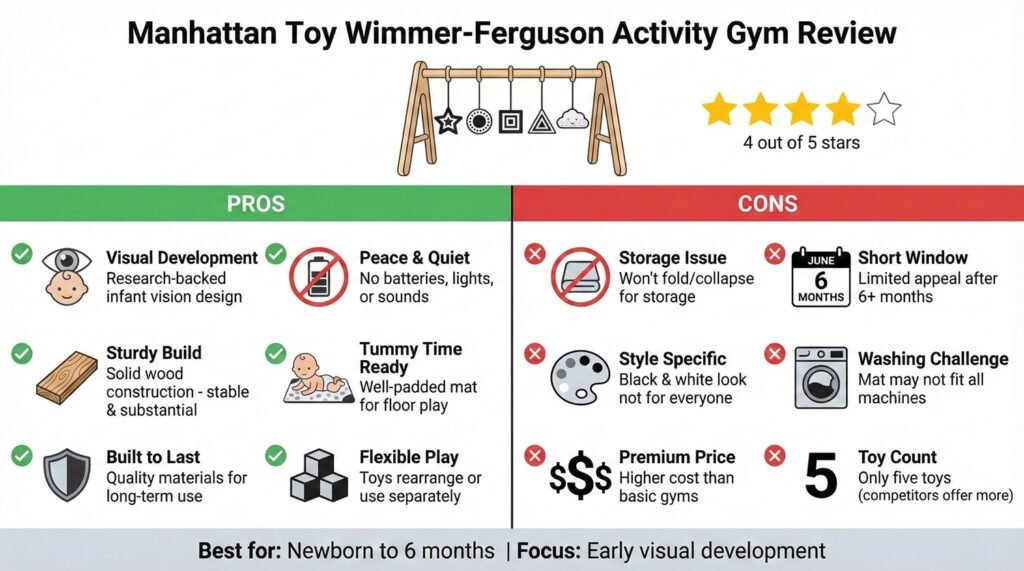
| Pros | Cons |
|---|---|
| Research-backed design for infant visual development | Doesn’t fold or collapse for quick storage |
| No batteries, lights, or annoying sounds | Limited appeal once baby’s vision fully develops (around 6+ months) |
| Solid wood construction feels substantial and stable | Black and white aesthetic not everyone’s style preference |
| Well-padded mat suitable for tummy time | Mat may be too large for some washing machines |
| Quality materials and construction for long-term use | Higher price point than basic activity gyms |
| Toys can be rearranged or used separately | Only five hanging toys included (some gyms come with more) |
What Works Really Well
The whole gym creates a calm environment instead of a chaotic one. When baby activity gyms compete to be the most stimulating option, this one goes the opposite direction and somehow wins.
Cleaning is straightforward. The wood wipes down easily, and the fabric pieces are removable for washing.
No electronic components means no “don’t get this part wet” restrictions.
The aesthetic actually looks decent in your living room. Not exciting, but not an eyesore either.
The natural wood and monochrome design doesn’t clash with most home decor.
Quality control seems consistent. Multiple units show the same good construction, not hit-or-miss quality like some baby products.
Where It Falls Short
Storage is genuinely annoying. The frame needs to be fully disassembled to store flat, and reassembly gets old if you’re breaking it down frequently.
The black and white focus is perfect for young babies but becomes limiting later. There’s no easy way to add colorful toys without ruining the whole visual concept.
For the price, five toys feels light. Some similarly priced baby activity gyms include 8-10 hanging pieces and many play modes.
The mat, while nice quality, isn’t reversible or dual-purpose. You get one design and that’s it.
User Experience
Setup and Daily Use
Getting the gym assembled the first time takes under 10 minutes. The pieces are clearly marked, and the construction makes intuitive sense.
No tiny screws to lose or confusing diagrams.
Moving it room to room is possible but awkward. The assembled gym is bulky enough that it’s easier to just pick a spot and leave it there.
Not ideal for small apartments or multi-room use.
Adjusting toy height and position takes seconds with the loop attachments. You can customize based on what your baby responds to or needs to work on developmentally.
From a Newborn Stage Perspective
Fresh out of the hospital, babies don’t do much except eat, sleep, and look vaguely around. This gym gives them something actually visible to look at during those brief alert periods.
The mat provides a clean, padded surface for floor time that doesn’t involve expensive foam tiles or blankets that bunch up. Having a designated baby zone helps establish routines early.
The toys at this stage are mostly decorative since newborns can’t reach or grab yet, but the visual tracking practice seems to keep them engaged.
Through the Tummy Time Phase
Tummy time starts out terrible for most babies (and parents). Having a setup that makes it slightly less miserable helps everyone survive those recommended daily sessions.
The padding on this mat provides enough cushion that babies can practice lifting their heads without face-planting on hard surfaces. The hanging toys give them something to look at besides blank floor.
As babies get stronger and start reaching, the toys provide good targets that move but don’t fall over or roll away (common frustration with floor toys).
When Baby Gets Mobile
Around 6-7 months when rolling and scooting start, the gym becomes less of a activity center and more of a safe play zone. Babies might ignore the hanging toys but still use the mat as a comfortable spot.
The wooden frame stays stable even when babies grab and pull on it while practicing sitting or trying to stand. This is actually pretty valuable, nothing worse than babies pulling things over on themselves.
Some families pack it away at this point, others keep it around as a familiar play area. Depends on your space and whether the baby still shows interest.
Cleaning and Maintenance
Spot cleaning the mat works for small messes. For bigger disasters (blowouts, major spit-up), the whole mat can be washed but it’s a production.
Having a backup play mat for wash days helps.
The wood frame just needs occasional wiping with a damp cloth. The natural finish doesn’t show normal wear like scratches or smudges much.
Fabric toys hold up to regular cleaning. The crinkle element keeps crinkling even after washing, and colors don’t fade noticeably.
Value for Money
The Manhattan Toy Wimmer-Ferguson Activity Gym typically runs about $80-120 depending on where you find it. That puts it in the mid-range for baby activity gyms, not budget territory but not premium pricing either.
Comparing to Cheaper Options
Basic baby gyms in the $30-50 range usually feature thinner mats, plastic frames, and toys that feel flimsy. They work fine for short-term use but don’t hold up as well to daily baby abuse.
The developmental focus here adds value if you care about research-backed design. Generic gyms throw together random toys without much thought about infant vision or development stages.
Construction quality alone justifies some of the price difference. Wooden frames beat plastic ones for stability and longevity.
Against Premium Competition
High-end baby activity gyms from brands like Lovevery or HABA can hit $150-200+. Those often include more toys, many configurations, or grow-with-baby features.
The Wimmer-Ferguson gym doesn’t have the versatility or extended age range of premium options. It serves one purpose really well but doesn’t transform into different play modes.
For families prioritizing developmental benefits over long-term versatility, this gym delivers solid value. For those wanting a single toy that advance from birth through toddlerhood, premium options might justify the extra cost.
Long-Term Investment Perspective
If you plan many kids, this gym will survive siblings. The construction quality supports reuse better than cheaper alternatives that barely make it through one baby.
Resale value stays decent because the brand recognition and quality are known. Used units sell for $40-60 if kept in good condition.
For single-child families, the useful period (roughly birth to 6-9 months) means calculating value differently. That’s potentially 6-9 months of daily use, which breaks down to about $10-20 per month at full price.
Cost Per Use Calculation
At the higher end ($120) and assuming 6 months of regular use, you’re looking at about $0.65 per day. That’s reasonable for a toy that provides developmental benefits and independent play time.
Compare that to bouncy seats, swings, or other single-purpose baby gear that often costs similar or more for comparable usage periods.
The key factor is whether your baby actually engages with it. Some babies love high-contrast patterns and will happily hang out under this gym.
Others couldn’t care less and want more colorful, interactive options.
Final Verdict
The Manhattan Toy Wimmer-Ferguson Activity Gym delivers exactly what it promises, developmentally suitable visual stimulation for young babies without the overstimulation of typical colorful, noisy choices. The quality construction and thoughtful design make it a solid choice for the newborn through early mobile stage.
This gym works best for families who value research-backed developmental toys over flashy features, prefer quiet play options, and have space to leave it set up. The investment makes sense if you plan to use it daily from birth through at least 6 months.
The design won’t appeal to everyone. If you want most versatility, lots of toys, or extended use into the toddler years, other options exist.
But for what it does, supporting infant visual development and providing a quality play space, it does it well.
Build quality exceeds most competitors in this price range. The wooden frame and well-made fabric pieces survive daily use without falling apart or looking worn quickly.
For families planning many children or wanting something to pass down, the durability adds value.
The storage limitation is real and annoying for small spaces. If you need something that folds flat or packs away easily, this will frustrate you.
Leaving it assembled in a dedicated play area works much better.
If you want a baby activity gym that follows developmental research instead of just being bright and loud, check current pricing and availability here. The Wimmer-Ferguson approach to infant stimulation has enough solid research behind it that the design makes sense beyond marketing claims.
The sweet spot for this gym is probably first-time parents who are nervous about development and want toys backed by actual research, or second/third-time parents who learned that babies don’t need every toy to sing and light up. The calm, focused approach to infant play is honestly refreshing in the baby product market.
Materials feel safe and non-toxic (important for toys that babies will definitely chew on), and the company has good safety standards. No weird chemical smells or concerning manufacturing.
For grandparents buying gifts, this gym hits that balance of being substantial and thoughtful without being overly expensive or complicated. The quality is obvious when you handle it, which makes it feel like a real gift as opposed to cheap plastic stuff.
Worth considering if you’re setting up a nursery or looking for tummy time solutions that don’t feel like sensory overload. The black and white design grows on you, especially when you’re not surrounded by sixteen other brightly colored baby items competing for attention.
The biggest question is whether your baby will actually engage with it. Most babies respond well to high-contrast patterns, but some want more variety or color earlier than others.
The developmental benefits are legitimate, but baby preferences vary.
At current market prices, the value proposition is fair but not exceptional. You pay for quality and thoughtful design, which matters if those things matter to you.
Budget alternatives exist but sacrifice construction quality and developmental focus.
If you value calm, research-backed baby gear over the loudest and brightest options, this activity gym is worth the investment. It does exactly what it’s designed to do without trying to be everything to everyone.
The lack of batteries alone saves money and hassle over time. No corroded battery compartments or dead toys that need replacing.
Simple toys with simple functions that babies understand and engage with naturally.
For eco-conscious parents, the materials and construction lean better than all-plastic choices. The wood is sustainably sourced (according to product specs), and the overall design supports reuse and hand-me-downs instead of disposable baby gear culture.
The Manhattan Toy Wimmer-Ferguson Activity Gym succeeds by staying focused on infant development instead of parent entertainment. It’s not the most exciting baby product you’ll buy, but it might be one of the most useful during those early months when you’re figuring out what babies actually need versus what marketing tells you they need.
Check retailer reviews and current pricing to see if it fits your budget and space. The consistent positive feedback across many platforms suggests this isn’t just clever marketing, it actually works for most babies during that crucial early development window.