
We may earn money or products from the companies mentioned in this post.
I remember the first time my daughter hit that four-month sleep regression and suddenly turned into a tiny, screaming tornado. Nothing worked. The swing didn’t work.
The pacifier didn’t work.
Walking her around the living room for the thousandth time definitely didn’t work.
I was desperate, exhausted, and willing to try absolutely anything that might give us both a moment of peace.
That’s when I stumbled onto something completely unexpected. I was folding laundry on the bed, and she grabbed onto a piece of corduroy fabric from one of my old shirts. The crying stopped. Just like that.
She was completely absorbed, running her tiny fingers over those ridges, her face transformed from distress to curiosity.
The answer was sensory input doing exactly what her developing brain needed.
Most parents don’t realize that fussiness often stems from their baby’s nervous system being either overwhelmed by too much stimulation or desperately seeking more input to understand the world. Sensory play addresses both problems, and you don’t need expensive equipment or a degree in child development to use it effectively.
Understanding Why Sensory Input Matters for Fussy Babies
Your baby’s brain is building itself in real-time through sensory experiences. Every touch, sound, sight, and movement creates neural pathways that form the foundation for everything they’ll learn later.
When babies cry inconsolably, they’re often signaling that something in their sensory environment is off. Either too much input is flooding their system, or they’re not getting enough stimulation to organize their nervous system.
Research from occupational therapy has shown that proprioceptive input, which is your baby’s sense of where their body is in space, is particularly calming. When babies engage with resistance-based activities like squishing, pushing, or pulling, they receive deep pressure input that literally regulates their nervous system.
This explains why babies often calm down when swaddled tightly or when you hold them firmly against your chest.
The pressure organizes their sensory system.
You can copy that calming pressure through structured play activities that simultaneously build crucial developmental skills. A baby who’s engaged in tactile exploration actively regulates their own nervous system while building the neural connections needed for later learning.
The challenge is knowing which activities are safe, age-appropriate, and actually effective as opposed to just keeping your baby momentarily entertained. There’s a massive difference between throwing random toys at a crying baby and providing targeted sensory input that addresses what their developing brain actually needs.
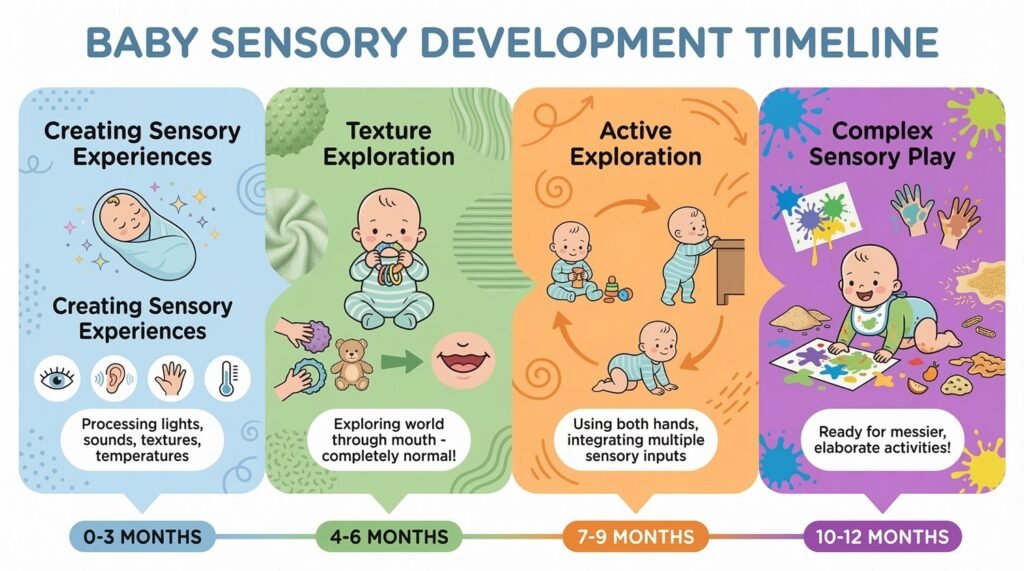
Creating Sensory Experiences for Newborns Through Three Months
During these early weeks, your baby’s sensory needs are surprisingly straightforward but absolutely critical. They’re processing an overwhelming amount of new information: lights, sounds, textures, temperatures.
They need your help organizing all that input.
Skin-to-skin contact regulates your baby’s temperature, heart rate, and stress hormones. When my son was going through a particularly fussy phase around six weeks, I spent an entire weekend doing extended skin-to-skin contact.
His fussiness decreased noticeably within 48 hours.
The deep pressure and warmth provided exactly what his nervous system needed to calm down.
Visual stimulation at this age needs to be high-contrast and simple. Your newborn can only see about 8-12 inches in front of their face, and they process bold patterns better than subtle colors.
I created a simple mobile using a wire hanger, fishing line, and black-and-white printed images I laminated. Hanging it above the changing table gave my daughter something to focus on during diaper changes, which transformed that activity from screaming chaos into calm observation time.
Auditory input needs predictable, repetitive sounds as opposed to constant music or white noise. Singing the same simple song during every diaper change or bath time creates neural pathways that help your baby anticipate what comes next.
That predictability is deeply calming.
I used to sing “You Are My Sunshine” during every single diaper change with my first baby. By week ten, he would visibly relax when he heard those opening notes because his brain had learned what was coming.
Tactile input at this stage should be gentle and repetitive. During tummy time, place different textures under your baby: a soft fleece blanket one day, a cotton sheet the next, a slightly nubby towel another day.
The variety helps their brain start categorizing different sensory experiences without overwhelming them.
One activity that worked remarkably well for my fussy newborn was the “beep game” during diaper changes. I’d touch different body parts, nose, toes, belly, knees, and say “beep” each time.
Within a few weeks, he started watching my hand and anticipating where I’d touch next.
That cause-and-effect learning kept him calm during what had before been a screaming ordeal.
Advancing to Texture Exploration from Four to Six Months
Once your baby can grasp and hold objects, their primary way of exploring the world becomes their mouth. This is completely normal and developmentally suitable.
The mistake many parents make is fighting this instead of working with it.
Textured balls became my under-the-radar advantage during this phase. I collected balls with different surfaces: one with soft rubber nubs, one made of fabric with tags, one with a smooth silicone surface.
My daughter would spend twenty minutes just passing these between her hands, bringing them to her mouth, and studying them intently.
That focused exploration provided exactly the sensory input she needed, and the fussiness that had plagued us for weeks practically disappeared.
Fabric exploration during this stage goes beyond just handing your baby different materials. Create a texture book by stapling or sewing fabric swatches to cardboard pages.
Include corduroy, velvet, silk, burlap, fleece, and satin. When my son was five months old and going through a particularly fussy phase during the witching hour, this homemade texture book bought me thirty minutes of calm every single evening.
Water play starts becoming appropriate around this age, though you need to be strategic. I’d place my daughter in her bouncer seat next to the bathroom sink and let her watch water running while I occasionally dipped her hands in. The combination of visual input from watching the water move and tactile input from feeling the temperature and movement provided multi-sensory stimulation that was completely absorbing.
Crinkly materials offer both auditory and tactile feedback that’s really satisfying for this age. I saved clean potato chip bags and cellophane from flower bouquets, wrapped them in mesh fabric to prevent tearing, and sealed them thoroughly.
The crunching sound combined with the resistance of squeezing created proprioceptive input that calmed my fussy baby immediately.
Obviously, this needs constant supervision. The moment you can’t watch, the activity ends.
Bath time became a rich sensory experience once I introduced natural sponges. Cut into large pieces that couldn’t be swallowed, these provided interesting texture, held water that could be squeezed out, and offered resistance when compressed. My son would squeeze a wet sponge over and over, completely absorbed in the cause-and-effect of water releasing each time.
Embracing Active Exploration from Seven to Nine Months
By this stage, your baby is examining everything with both hands and observing their environment from many positions: sitting, crawling, pulling to stand. Their sensory needs become more complex because they’re integrating many types of input simultaneously.
Pom pom play was shockingly effective for my daughter during this phase. I bought large craft pom poms, big enough that they couldn’t be swallowed, in bright colors and dropped them into clear plastic containers.
Watching her retrieve them one by one, examining each color, transferring them between containers, provided twenty to thirty minutes of completely focused exploration during what had been her fussiest time of day.
Container play exploded during these months. I saved yogurt containers, plastic food storage containers, and small boxes.
Nesting them, filling them with blocks, dumping them out, and refilling them became endlessly fascinating.
The key was providing containers of different sizes and materials, plastic, cardboard, metal tins, so each provided slightly different sensory feedback.
Touch-and-feel books moved from passive observation to active exploration. My son would spend significant time running his fingers over textured pages, pressing buttons that made sounds, and lifting flaps.
The combination of visual, tactile, and sometimes auditory input provided multi-sensory stimulation that kept him engaged and calm.
Water table time became a daily activity once my daughter could sit independently. I used a large shallow storage container filled with just two inches of water, placed it on a towel on the floor, and added measuring cups, small containers, and floating toys.
The bilateral coordination required to scoop water, the proprioceptive input from the resistance of moving through water, and the visual feedback of watching water pour created a completely absorbing sensory experience.
Obstacle courses sound elaborate, but at this age they’re really simple. I arranged couch cushions on the floor to crawl over, placed a cardboard box with both ends cut out to crawl through, and put interesting toys at various points.
The varied surfaces, heights, and textures provided vestibular input that helped organize my son’s sensory system remarkably well.
Implementing Complex Sensory Play from Ten to Twelve Months
Once your baby is crawling confidently and starting to cruise or walk, their capacity for complex sensory experiences increases dramatically. This is when you can introduce messier, more elaborate activities that provide intense sensory input.
Bubble play provides sophisticated multi-sensory input. Blowing bubbles gives your baby something to track visually, developing visual tracking skills.
Watching bubbles float down provides vestibular input as they tip their head back.
Reaching to pop bubbles develops hand-eye coordination. Feeling bubbles land on their skin provides unexpected tactile input.
My son would go from overtired and fussy to completely calm within minutes of starting bubble play.
Shaving cream exploration was honestly one of my favorite activities, though it required setup and cleanup commitment. I covered our kitchen table with a plastic tablecloth, sprayed shaving cream directly on the surface, and let my daughter go to town.
I provided brushes, spatulas, plastic spoons, and her hands.
The resistance of pushing through shaving cream provided proprioceptive input. The cool temperature and slippery texture provided tactile input.
The novelty and messiness made it completely absorbing.
She’d play for forty-five minutes straight, unheard of for a one-year-old.
Clean painting eliminated my anxiety about my baby eating paint. I put several drops of different food coloring in a gallon ziplock bag, sealed it thoroughly, and taped it to a window at my daughter’s standing height.
She could squish the colors around, creating patterns, without any possibility of ingestion.
The vertical surface encouraged standing practice, strengthening her core and leg muscles while providing visual and tactile feedback.
Gelatin sensory play solved the problem of my son putting absolutely everything in his mouth. I made several boxes of gelatin in different colors, let it set in shallow containers, and then cut it into cubes and shapes.
Because gelatin is safe to consume, I didn’t need to stress when he inevitably tasted it.
The squishy, cool, jiggly texture provided tactile input that was different from anything else we’d tried. He’d squeeze pieces, watch them wiggle, and occasionally take a small taste. The focused exploration lasted much longer than I expected.
Taste-safe play dough became a daily activity. I mixed equal parts flour and water with a few drops of food coloring and a tablespoon of vegetable oil for smoother texture.
My daughter could squish, roll, poke, and explore without me constantly hovering to prevent ingestion.
Adding safe items like large pasta shapes or wooden blocks gave her tools for making impressions and creating patterns. The resistance of manipulating play dough provided exactly the kind of calming proprioceptive input that settled her nervous system.
Food-based sensory bins solved many problems at once. I poured a cup of O-shaped cereal into a small plastic bin with measuring cups, spoons, and small containers.
My son could practice scooping and pouring while I didn’t worry about what went in his mouth.
The focused hand-skill practice combined with the acceptable mouthing exploration meant he stayed engaged and calm for surprisingly long periods.
Recognizing Common Sensory Play Mistakes
The biggest mistake I made early on was becoming so anxious about choking hazards that I eliminated almost all sensory play. My daughter became noticeably more fussy and harder to soothe.
Once I understood that age-appropriate sensory play with proper supervision was safe, everything improved. The key is matching materials to your baby’s developmental stage and actual abilities, not just their age on paper.
Over-complicating setups was another trap I fell into. I’d see elaborate sensory bins on social media and feel inadequate when I didn’t have seventeen different materials and perfect Instagram lighting.
Then I’d skip doing anything at all because it felt overwhelming.
Eventually I realized that a simple container with water and a cup was a legitimate sensory activity that provided real developmental benefit. The complexity of your setup means nothing to your baby.
They care about the sensory input, not the aesthetics.
Ignoring my baby’s person sensory preferences caused unnecessary stress. My first child loved water play and would spend ages at a water table.
My second child found water play overwhelming and would cry within minutes.
That didn’t mean I was doing something wrong. My second child had different sensory preferences that I needed to respect.
When I switched to dry sensory bins with fabric and pom poms, he thrived. Your baby’s response to activities tells you everything you need to know about whether an activity is right for them.
Forgetting that supervision is mandatory led to a scary moment when my daughter managed to tear open a sealed ziplock bag during clean painting. Nothing terrible happened because I was right there and stopped her immediately, but it was a sharp reminder that “safe” activities still need active watching.
I learned to position myself within arm’s reach during any sensory play and to remove materials the instant I needed to step away.
Using materials that required constant “no” corrections defeated the purpose of calming sensory play. If I spent an entire activity telling my son not to throw rice or not to eat play dough, neither of us ended up calm.
Switching to taste-safe materials for my frequent-mouthing baby transformed our experience.
Instead of battling over what went in his mouth, I could relax and let him explore naturally.
Adapting Sensory Activities to Your Baby’s Specific Needs
Babies who are sensory-seeking need activities with intense input. These are babies who crash into things, love being tossed in the air, and seem to constantly want more stimulation.
For my sensory-seeking daughter, gentle activities didn’t cut it.
She needed heavy resistance play: squishing very thick play dough, pushing weighted laundry baskets across the floor, climbing over large cushions. The intense proprioceptive input these activities provided actually calmed her down, even though it looked like I was ramping her up.
Babies who are sensory-sensitive need the opposite approach. These babies startle easily, don’t like loud noises, and may resist messy textures.
My sensory-sensitive son needed gradual exposure to new textures starting with barely-there sensations.
Instead of dumping him into a container of gelatin, I’d start by letting him watch me play with it, then touch it with one finger, then work up to hand exploration over many sessions. Respecting his sensitivity as opposed to pushing him led to much better outcomes.
Time of day matters enormously for sensory activities. Morning sensory play when your baby is well-rested can be more complex and stimulating.
Late afternoon sensory play during the witching hour needs to be calming and organizing as opposed to exciting.
I learned to save intense activities like obstacle courses for morning and use slow, focused activities like texture books for evenings.
Your baby’s person development timeline matters more than general age guidelines. My daughter hit all her motor milestones early and was ready for complex sensory activities at younger ages than guidelines suggested. My son took longer to crawl and needed to stay with simpler activities for extended periods.
Trust your observation of your actual baby over general developmental charts.
Environmental factors affect which sensory activities work best. On rainy days when we couldn’t go outside, my babies needed more intense vestibular input through movement activities.
On overstimulating days after busy outings, they needed quiet, focused sensory play like fabric exploration.
Adapting your approach to your baby’s current state as opposed to following a rigid schedule produces better results.
People Also Asked
What calms a fussy baby fast?
Deep pressure input through firm swaddling or holding your baby against your chest often calms fussiness within minutes. Proprioceptive input organizes your baby’s nervous system.
Skin-to-skin contact regulates temperature, heart rate, and stress hormones.
For babies over four months, textured materials they can grasp and explore provide immediate sensory input that shifts their focus from distress to exploration.
How do I know if my baby is overstimulated?
Overstimulated babies turn their heads away from stimulation, arch their backs, clench their fists, and escalate from fussing to crying. They may have difficulty making eye contact and seem to get more upset when you try typical soothing methods.
Moving your baby to a quiet, dimly lit space and reducing sensory input usually helps them calm down within ten to fifteen minutes.
What textures are safe for babies to explore?
Soft fabrics like fleece, velvet, and cotton are safe for all ages. Corduroy, burlap, and satin provide different textures.
For babies who mouth everything, natural sponges cut into large pieces, silicone teething toys, and taste-safe materials like cooked pasta work well.
Avoid anything small enough to be a choking hazard and materials that can tear into small pieces.
When can babies start water play?
Babies can start supervised water play around four months when they have some head control. Start with simple activities like watching water run from a faucet and touching it with their hands.
By six months, babies sitting independently can explore shallow containers with two inches of water.
Always stay within arm’s reach during any water activity.
How long should sensory play last for babies?
Newborns might engage with sensory activities for just three to five minutes before needing a break. By six months, babies often focus for ten to fifteen minutes.
Nine to twelve month olds can engage for twenty to thirty minutes with activities that really interest them.
Watch your baby’s cues as opposed to forcing a set duration. When they start looking away or fussing, the activity is over.
What are sensory bottles for babies?
Sensory bottles are sealed clear containers filled with items that move when shaken or tipped. Fill clear plastic bottles with water and glitter, oil and food coloring, or small lightweight objects like beads or pom poms. Seal the lid with strong glue to prevent opening.
Babies watch the contents move, providing visual tracking practice and calming visual input.
Can sensory play help with baby sleep?
Calming sensory activities before bedtime help organize your baby’s nervous system and signal that sleep is coming. Gentle activities like fabric exploration, quiet touch-and-feel books, or watching a sensory bottle create a transition from active play to rest.
Avoid stimulating sensory activities within an hour of bedtime, as these can make it harder for your baby to settle.
Key Takeaways
Sensory play addresses the root cause of much infant fussiness by providing organizing input to overwhelmed nervous systems or needed stimulation to understimulated babies. Structured play speeds up brain development while simultaneously calming crying.
Age-appropriate materials and proper supervision make sensory play safe without requiring expensive specialty items. Your home already contains everything needed: fabric, containers, safe household objects, and your engaged presence.
Understanding your baby’s person sensory profile allows you to choose activities that actually work instead of fighting their natural preferences. Babies who love intense input need different activities than babies who are easily overwhelmed.
Multi-sensory activities that engage several senses simultaneously provide richer neural input and are more calming than single-sense activities. Water play engages touch, proprioception, and vision.
Gelatin exploration includes tactile, visual, and sometimes taste input.
Taste-safe sensory materials eliminate the stress of constant supervision to prevent mouthing and actually support normal infant development. Babies learn through their mouths.
Fighting that natural exploration creates power struggles that increase as opposed to decrease fussiness.