Introduction
The Montessori furniture market has gotten crowded lately. Every brand claims their shelf supports independence and child-led learning, but most of them are just regular bookcases painted white and marked up 40%.
Sprout Kids positions their shelves differently. They’re talking about Baltic Birch construction, tool-free assembly that actually works, and height options that grow with your kid from crawling to kindergarten.
The pricing reflects this positioning. We’re looking at $200-500 depending on which model and height you pick.
That’s not impulse-buy territory, especially when you’re already dropping serious money on montessori baby toys to fill the thing.
So the question becomes pretty straightforward. Does the build quality justify the cost, or are you paying extra for aesthetic appeal that wears off after the first juice spill?
I spent time going through customer feedback, assembly experiences, and long-term durability reports to figure out where this shelf actually lands.
What You’re Actually Getting
Sprout sells a few different models, but the most popular ones are their Home Montessori Closed Back Shelving and the Birch Low Montessori Infant Shelf.
Everything arrives flat-packed. You get Baltic Birch components (15mm thick), adjustable shelf supports, and a Wall Anchor Kit that comes standard with every order.
The whole assembly process happens without tools. No screws, no bolts, no allen wrenches that disappear into your couch cushions.
Everything snaps together through slot-and-tab construction.
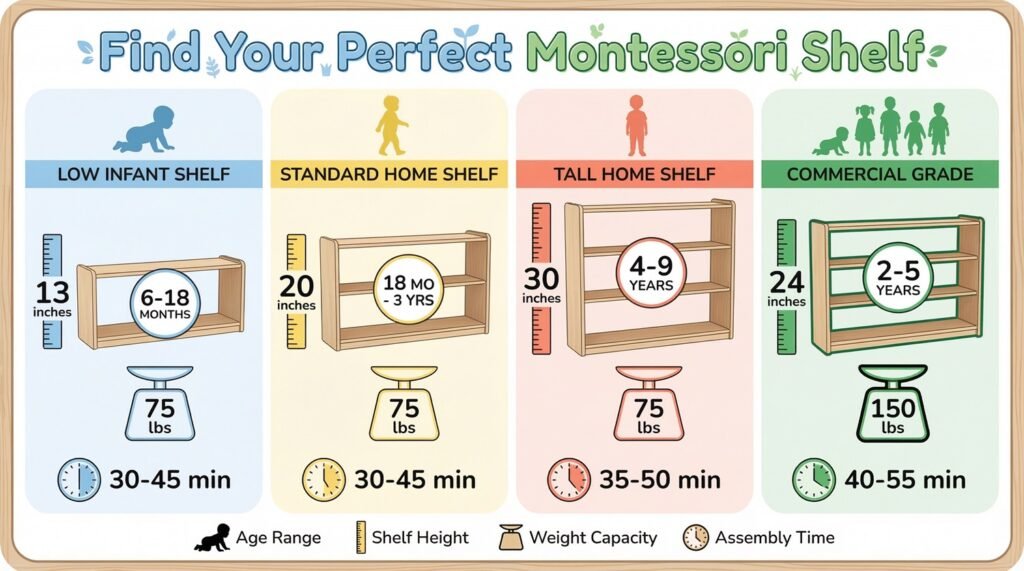
Height options start at 13 inches for babies (roughly 6-18 months) and go up to 30 inches for older kids around 4-9 years old. Width runs either 30 or 45 inches depending on the model, with about 11.5 inches of depth.
Weight capacity sits at 75 pounds for infant models and jumps to 150 pounds for their commercial-grade versions that daycares and preschools use.
The adjustable shelf positions matter more than they sound like they would. You can space everything according to your kid’s actual height instead of fighting with fixed shelving that puts toys too high or too low.
[Check current Sprout Kids shelf models and sizing options here]
Setup Reality Check
The tool-free assembly claim is legit, but that doesn’t mean it’s quick or effective.
Most people report spending 30-45 minutes on initial setup. The pieces only fit one way, which prevents mistakes, and means you’re manually pressing Baltic Birch components into slots that need steady pressure and careful alignment.
It’s not complicated. It’s just physically involved.
Two people makes this significantly easier. Solo assembly is possible but you’ll probably get frustrated when you’re trying to hold the frame steady while clicking the back panel into place.
The wall anchor kit isn’t optional, by the way. Sprout includes it with every shelf because these things need to be secured properly.
Kids pull themselves up on furniture, lean on it, climb it when you’re not looking.
If your walls are plaster or concrete instead of standard drywall, you might need different hardware than what’s included. That’s something to figure out before you start assembly.
Some users mention the back panel fitting imperfectly or needing adjustment. This seems to happen occasionally across different production batches, which suggests quality control isn’t 100% consistent.
If you get a shelf with alignment problems, Sprout’s customer support appears responsive based on what people report. They’ll either walk you through adjustments or send replacement components.
Build Quality That Actually Holds Up
This is where the pricing starts making more sense.
Baltic Birch is harder and more stable than regular plywood. It handles repetitive stress better, which matters when your kid is using the shelf edge to pull themselves up 50 times a day while learning to cruise.
The wood finish arrives smooth. No rough spots, no splinters, no edges that need sanding before you let your baby near it.
The aesthetic appeal shows up in customer feedback constantly. These shelves look intentional.
They don’t scream “kids furniture” in a way that makes you want to hide them in the playroom.
Natural wood finish works in most spaces without clashing with your existing furniture. If you care about interior design at all, this matters more than it probably should.
| Shelf Model | Height | Age Range | Weight Capacity | Assembly Time |
|---|---|---|---|---|
| Low Infant Shelf | 13 inches | 6-18 months | 75 lbs | 30-45 min |
| Standard Home Shelf | 20 inches | 18 months-3 years | 75 lbs | 30-45 min |
| Tall Home Shelf | 30 inches | 4-9 years | 75 lbs | 35-50 min |
| Commercial Grade | 24 inches | 2-5 years | 150 lbs | 40-55 min |
Durability gets tested through actual long-term use. Sprout backs the Home Montessori models with a 5-year warranty.
Commercial versions get longer coverage for classroom environments where furniture takes serious abuse.
People who have multiple kids report these shelves lasting through years of use. That’s important when you’re trying to justify the upfront cost.
One thing to know: the shelf can have slight side-to-side movement when fully assembled. Sprout says this is normal and not a safety concern. It’s different from actual wobbliness, which would show assembly problems.
If your shelf has significant movement or feels unstable, that’s when you contact their support team.
Safety Stuff You Should Know
Montessori principles emphasize letting kids choose their own activities, but that only works if the furniture can handle real kid behavior.
Sprout specifically designs these shelves for infants who pull themselves up to stand. That means the construction needs to handle weight shifts, grabbing, occasional falls against it, and general chaos.
The included wall anchoring addresses tip-over risk. You need to use it.
Furniture tip-overs cause injuries every year, and no aesthetic preference is worth that risk.
Height recommendations exist for actual developmental reasons. A 13-inch shelf for infants keeps items within arm’s reach without requiring climbing.
Taller options for older kids account for increased reach as they grow.
Following these recommendations matters more than trying to maximize storage capacity.
The closed-back option (available on some models) prevents toys and small items from falling behind the shelf. Less mess, fewer lost pieces, and nothing rolling under furniture where you can’t reach it.
How Montessori Baby Toys Actually Work With This Shelf
Buying a Montessori-aligned shelf only makes sense if you’re also choosing appropriate montessori baby toys and materials to put on it.
The open design assumes you’ll rotate toys regularly. You’re presenting a limited selection at a time, not cramming every toy you own onto three shelves.
This practice (called shelf rotation in Montessori circles) prevents overwhelm and helps kids focus on toys that match their current developmental stage.
Typical items that work well include wooden stacking toys, sensory balls, practical life materials like wooden spoons or fabric books, picture books displayed cover-forward, and simple puzzles.
The accessible height invites kids to choose independently. That’s the whole point of Montessori principles.
If you buy this shelf but fill it with plastic battery-operated toys or keep it at adult height, the Montessori design isn’t actually functioning as intended. You’re paying for aesthetic appeal without capturing the functional benefits.
A standard bookshelf would work equally well in that scenario.
Performance Analysis: What Works and What Doesn’t
The tool-free assembly genuinely delivers on its promise. You won’t need to dig through your toolbox or watch assembly videos three times.
Baltic Birch construction handles active use without showing wear quickly. The wood doesn’t chip easily, doesn’t scratch from normal toy storage, and ages well over multiple years.
The adjustable shelving provides real flexibility as your kid grows. You’re not locked into fixed positions that stop working when your baby becomes a toddler.
Wall anchoring works with standard drywall using the included hardware. Other wall types need different anchors, which adds an extra step to setup.
The 75-pound weight limit on home models feels restrictive if you’re planning to store heavy items like hardcover book collections or large wooden toy sets. You need to distribute weight carefully across shelves.
Some units arrive with back panels that don’t fit perfectly. This happens occasionally, not constantly, but it’s annoying when you’ve already spent 30 minutes on assembly.
The natural wood finish looks great initially but will show wear over time. That’s expected with wooden furniture in active use, not a defect.
Customer support responsiveness matters when you’re dealing with premium-priced furniture. Based on available feedback, Sprout handles issues reasonably well when they come up.
What People Actually Say About Using It
Parents consistently mention that kids naturally put items back on the shelf themselves. This supports cleanup routines without constant nagging.
The outcome aligns with Montessori intentions, though results depend partly on how you frame shelf use with your kid.
Grandparents appreciate the quality and durability when buying these as gifts. These shelves provide genuine utility as opposed to becoming clutter after six months.
The aesthetic qualities matter to people who care about interior design. These shelves look intentional enough that you’ll want them in living spaces, not hidden away in spare rooms.
Classroom educators report using these shelves for years with minimal maintenance. That speaks to durability under heavy use from multiple kids daily.
[Read current customer reviews and see updated photos here]
Negative experiences cluster around assembly frustration (especially solo assembly) or receiving units with alignment issues requiring support contact.
Price concerns show up often, but usually from people comparing these to budget furniture as opposed to similar-quality wooden pieces.
Pros and Cons Breakdown
What Works:
Tool-free assembly that genuinely needs no hardware or power tools. This is accurate advertising, not marketing spin.
Baltic Birch construction handles active use and ages well over multiple years and multiple kids.
Multiple height options accommodate different ages without needing to buy new furniture every 18 months.
Open design explicitly supports Montessori principles of child autonomy and independent choice.
Wall anchor kit comes included, addressing safety compliance without extra purchases.
5-year warranty provides reasonable coverage for home use.
Natural finish matches minimalist and eco-conscious design preferences without looking generic.
What Doesn’t:
Premium pricing ($200-500+) compared to generic shelving options. This is investment-level furniture, not budget storage.
Assembly needs two people and 30-45 minutes of focused work. Solo assembly gets frustrating.
Occasional quality control issues with back panel fit or component alignment.
75-pound weight limit on home models restricts storage capacity more than you’d expect.
Light side-to-side movement is normal but feels concerning until you understand it’s expected.
Wall anchoring requirement limits placement flexibility if you want to move furniture around.
Back-panel versions cost more than open-back options while reducing visibility.
Value Analysis: Breaking Down the Pricing
This comes down to what you’re getting for the money and how long it actually lasts.
Quality wooden shelving at this height and stability typically costs $150-250 from mainstream retailers. Sprout’s pricing ($200-500 range depending on size) reflects premium materials and intentional design as opposed to typical markup.
The value proposition centers on longevity and multi-child use.
Parents who keep these shelves through multiple kids or resell them recoup significant portions of the initial investment. These hold resale value better than particle-board furniture that falls apart.
Using the shelf for a single child over several years still provides reasonable cost-per-year of use compared to replacing cheaper furniture every 2-3 years.
The warranty and customer support add perceived value, though actual warranty claims seem rare based on customer feedback.
The cost justification is straightforward: you’re buying furniture that will still be functional and attractive 5-10 years later. Generic particle-board options deteriorate within 2-3 years under normal kid use.
If durability matters to your family, the premium pricing tracks with actual product lifespan.
[Compare current pricing across different shelf heights here]
Better Than Generic Educational Shelving?
Yes, but only if you’re actually implementing Montessori principles alongside the shelf.
A standard bookshelf stores items identically from a pure storage perspective. The distinction with Sprout shelving is the intentional design supporting child autonomy through specific height, open visibility, and easy content rotation.
This design genuinely encourages independent play and cleanup when you actively use it that way.
If you’re buying a Montessori shelf but filling it randomly or keeping it at adult height, you’re paying for aesthetic design without functional benefits. A less expensive shelf works identically in that scenario.
The shelf genuinely looks better than budget choices, which matters if obvious “kids furniture” bothers you aesthetically.
The open design also makes montessori baby toys more visible and accessible compared to closed storage bins where everything gets buried and forgotten.
Final Verdict
Sprout Kids Montessori shelves deliver on quality, durability, and design intentions when you’re actually using them according to Montessori principles.
Assembly is genuinely tool-free but needs patience and ideally two people. The Baltic Birch construction holds up through years of child use.
The aesthetic appeal means you won’t mind visible placement in main living areas.
The premium price is justified primarily through longevity and multi-child utility as opposed to features or extras. These shelves represent a reasonable investment if you value furniture that supports child independence and survives active use.
They’re not necessary for Montessori learning. Many families use budget shelving effectively with the same montessori baby toys and materials.
But these are well-designed and built to last if those qualities matter to you.
The shelf works best alongside thoughtfully selected montessori baby toys and learning materials. If you’re intentional about toy rotation and follow Montessori principles, the combination creates a functional learning environment.
Without that intentionality, you’re paying for aesthetics as opposed to function.
For grandparents seeking educational gifts, this shelf offers genuine utility that grows with children and lasts through multiple gift-receiving occasions.
For parents committed to Montessori approaches at home, this is a sensible foundational piece for your child’s learning space.
The primary question isn’t whether Sprout shelves are good (they’re consistently solid). The question is whether the premium price aligns with your family’s values around durability, aesthetics, and supporting child autonomy.
If it does, the investment makes sense.
If you’re looking for the cheapest storage solution, less expensive options exist that function identically from a pure storage perspective without the premium materials or intentional design elements.
[Shop Sprout Kids Montessori Shelves and explore current options]
The shelf positions itself as investment furniture as opposed to disposable storage. That positioning is accurate based on construction quality and customer experiences over time.
Whether that investment fits your family’s needs and budget depends on your specific priorities around child development, furniture longevity, and interior aesthetics.