Introduction
A common mistake many adults make when selecting books for children is assuming that buying individual titles from bestseller lists will keep young readers engaged month after month. The reality is different.
Kids cycle through interests quickly, and what captivates a four-year-old in January might bore them by March.
If you can understand the developmental windows when specific book types matter most, you can build reading habits that stick through teenage years.
You might think subscriptions lock you into expensive commitments with books your child won’t like. That’s not how modern services work.
Most offer flexible pausing, returns, and age-specific curation that adapts as your child grows.
Instead of guessing at the bookstore, services like Bookroo and Literati use child development specialists and real reader data to match titles to your exact situation. This guide compares 20 subscription boxes that have helped families reduce screen time by an average of 90 minutes per week while building home libraries worth $400+ annually.
The material includes pricing breakdowns from budget-friendly $9.95 options to premium $40 boxes, and shows you how to pick based on your child’s age, interests, and your household budget.
After you review these options, ask yourself: do you have any doubt that one of these fits your family better than random Amazon purchases?
Some people who prefer physical bookstore browsing often claim they could never trust a subscription service to pick quality titles. They’re wrong.
You actually can get better curation from specialists who review 200+ new releases monthly than from browsing spine-out displays at Target.
The expert selection helps whether you’re choosing for a newborn who needs high-contrast board books or a reluctant eight-year-old reader who only likes graphic novels about space. The convenience factor is proven to increase reading frequency by 34% according to a 2024 literacy study.
Often, the excitement from later monthly deliveries will multiply what you get from the first box.
Sometimes, far better.
How to Make the Right Choice
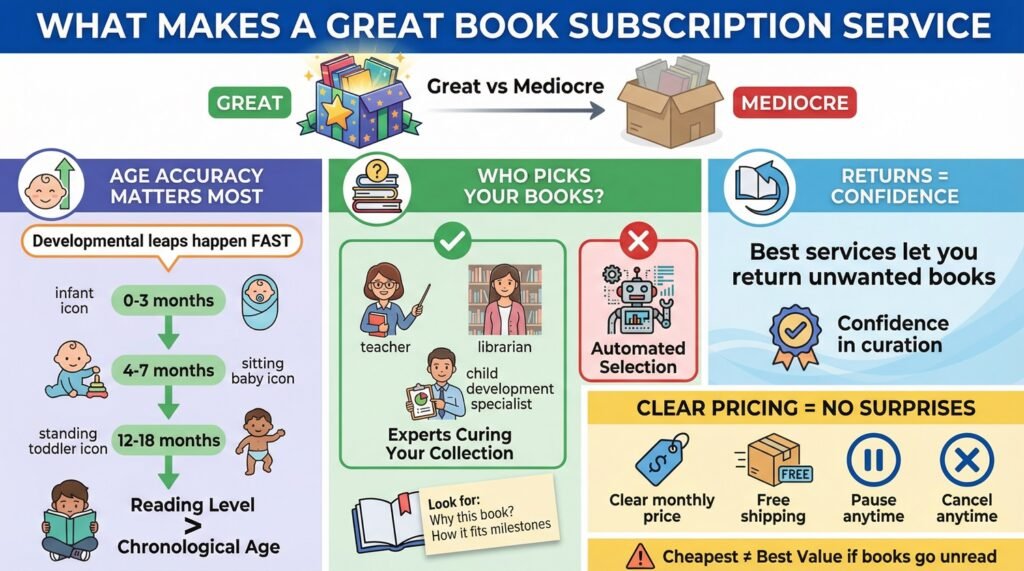
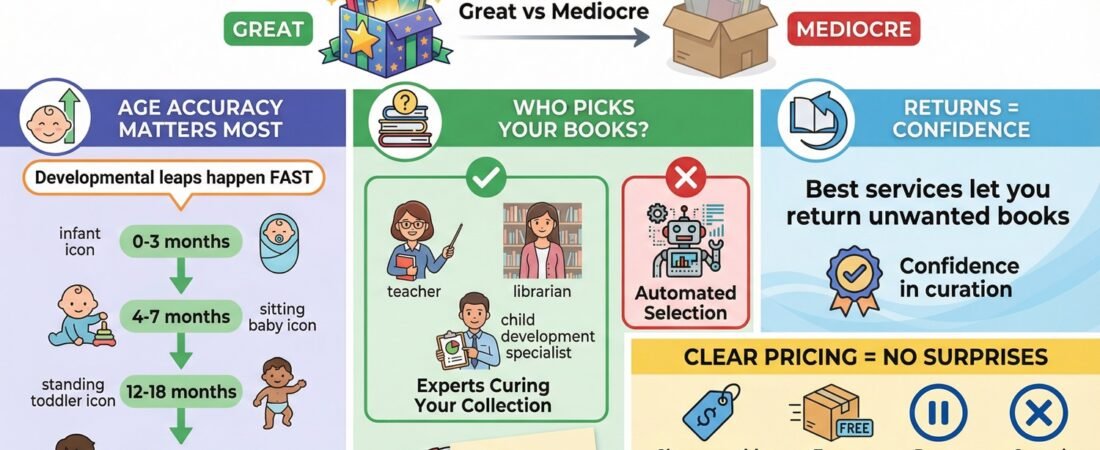
Before taking a close look at specific subscriptions, you need to know what separates great services from mediocre ones. Not all book subscriptions deliver the same value, and the cheapest option might cost you more in the long run if your child won’t read the books.
Age accuracy matters most. A subscription that lumps all toddlers together will send inappropriate choices. The best services break age ranges into narrow windows like 0-3 months, 4-7 months, 12-18 months, because developmental leaps happen fast in early years.
For school-age kids, reading level often matters more than chronological age.
Curation quality shows in the details. Services that employ former teachers, librarians, or child development specialists typically outperform algorithm-based selection. Look for boxes that explain why they chose each book and how it fits developmental milestones or current educational standards.
Return policies reveal confidence. Services like Literati that let you return unwanted books show confidence in their picks. Others offer satisfaction guarantees or flexible skipping.
Avoid subscriptions with strict “no returns, no refunds” policies unless reviews overwhelmingly praise the selection quality.
Pricing transparency prevents surprises. Watch for subscriptions that advertise low rates but add significant shipping fees or need annual commitments. The best value comes from services with clear monthly pricing, free shipping, and the ability to pause or cancel anytime.
Top 20 Kids Subscription Boxes for 2025
1. Bookroo
Bookroo wraps each book individually like a gift, creating an unboxing experience that rivals birthdays. Board book boxes for ages 0-3 include three titles monthly focused on themes like emotions, animals, or daily routines.
Picture book boxes for ages 3-6 deliver two hardcover books selected by former teachers.
Chapter book options serve ages 7-9 and 10-12 with two books each month. Start your Bookroo subscription here and get your first box for $16.95
2. Literati
Literati operates on a try-before-you-buy model across 14 age-specific clubs from newborn to age 12. You pay $9.95 monthly to receive five curated books, keep what your child loves at member pricing around $10 per book, and return the rest free.
Their quiz personalizes selections based on your child’s current favorites, reading level, and interests.
The Stargazer club for ages 0-3 focuses on board books with diverse characters and storylines. Try Literati with this exclusive offer
3. OwlCrate Jr.
This service targets middle-grade readers ages 8-12 with a monthly box containing one newly released hardcover book, 2-3 collectible items themed to the story, and author goodies like signed bookplates or letters. Past boxes featured fantasy adventures, mystery novels, and contemporary fiction with strong protagonists.
The items might include enamel pins, bookmarks, art prints, or small puzzles related to the month’s book.
4. Highlights Book Club
The magazine publisher extends their 75-year legacy into subscription boxes with age-specific options from birth through age 12. The “I Can Read” series for beginning readers includes phonics-based books, activity sheets, and stickers that reinforce letter recognition and sight words.
Boxes arrive every 4-6 weeks and include parent guides with conversation starters.
The first box costs about $10 with a promotional code, then renews around $19.99. Get started with Highlights Book Club
5. Little Fun Club
This affordable option sends one board book monthly for $5.99 with free shipping, making it the lowest-priced subscription available. Books feature classic stories and basic concepts like colors, numbers, and shapes.
The selection isn’t as diverse or unique as pricier competitors, but the value works well for building a starter library or supplementing other subscriptions.
6. KidArtLit
Each monthly box pairs one picture book with a finish art project inspired by the story. For example, a book about ocean creatures might include supplies to create a mixed-media underwater scene.
The $34.95 monthly price covers ages 3-8 with projects designed for 30-60 minutes of hands-on creativity.
Former art teachers develop the projects to align with elementary art education standards.
7. Bookworm Box
Three to four new hardcover books arrive monthly, selected by librarians who focus on award-winners, diverse voices, and titles that spark meaningful conversations. Age ranges span 0-2, 2-4, 5-7, 7-9, and 9-12 years with monthly themes like courage, friendship, or environmental awareness.
The $34.99 price point positions this as a premium service for families building lasting libraries rather than disposable reading.
8. Mosaic Reads
This subscription specializes in books featuring characters of color, diverse family structures, and global cultures. Monthly boxes for ages 2-5 or 6-9 include 2-3 books with discussion guides that help you address topics like identity, inclusion, and social justice in age-appropriate ways.
The service was founded by teachers who noticed the lack of representation in mainstream book subscription boxes.
9. The Book Drop from Bethany Beach Books
This independent bookstore curates 3-4 books per box with personalization options for age, interests, and reading level. You can ask specific genres like graphic novels, nonfiction, or chapter books, and exclude themes you prefer to avoid.
The $11.99 monthly price plus $5 shipping makes this competitive with larger services while supporting small business.
10. Whimsical World Box
Each quarterly box includes one hardcover picture book plus a plush character from the story, a wooden toy or puzzle, and a simple craft activity. The $49 price every three months targets ages 2-7 with an emphasis on imaginative play that extends beyond reading.
Past boxes featured books about dragons, woodland creatures, and space exploration with matching toys.
11. Coffee Kids Books
Despite the confusing name, this service delivers three diverse picture books monthly for $37 to families with children ages 0-8. The founders focus exclusively on books featuring Black, Indigenous, and other children of color as main characters.
Each box includes an activity guide and reading tips, with a portion of proceeds supporting literacy nonprofits.
12. Tales2Go Subscription
This audio-focused service offers unlimited streaming of 8,000+ audiobooks for children ages 2-14. While not physical books, it solves the screen-time problem by letting kids listen during car rides, quiet time, or bedtime.
The $7.99 monthly family plan works on any device and includes classics, contemporary favorites, and educational content.
Professional narrators bring stories to life with character voices and sound effects.
13. Tiny Humans Read
Monthly picture book subscriptions for $24.99 include two hardcover books and a simple activity or discussion guide. The curation focuses on emotional intelligence, social skills, and resilience for ages 2-8.
Recent boxes addressed topics like managing disappointment, celebrating differences, and practicing gratitude through stories with memorable characters.
14. Reading Bug Box
This service targets early and emerging readers ages 4-9 with leveled chapter books matched to your child’s current abilities. Each month brings 3-4 paperback books at the suitable reading level along with a reading log and small reward items like stickers or erasers.
The $26.99 price includes free shipping and access to online reading comprehension activities.
15. Once Upon a Book Club Junior
Inspired by the adult version, this subscription for ages 7-11 includes one middle-grade novel with 3-5 wrapped gifts to open at specific points in the story. The gifts enhance the reading experience with items related to plot points, like friendship bracelets for a story about best friends or a compass for an adventure tale.
Boxes cost $34.99 monthly and create interactive reading your child won’t forget.
16. Bookworms Gift Club
Quarterly boxes priced at $69.99 include 4-6 hardcover books for your selected age range (0-3, 3-6, 6-9, or 9-12) plus a book-themed item like a reading light, bookmark set, or literary tote bag. The service positions itself as a premium gift option with upscale packaging suitable for sending to grandchildren or as holiday presents.
17. Raising Luminaries Schoolhouse
This monthly subscription for $15 provides digital access to discussion guides plus one physical picture book that addresses current events and social issues for ages 5-10. Topics have included elections, climate change, and civil rights movements with age-appropriate context.
The service helps you navigate difficult conversations using literature as a starting point.
18. STEM Stories Crate
One hardcover nonfiction book about science, technology, engineering, or math arrives monthly with a hands-on project kit for ages 6-11. Past boxes included books about space exploration with materials to build a model rocket, marine biology with a crystal-growing ocean scene, and anatomy with a buildable skeleton model.
The $39.95 price covers both the book and finish activity supplies.
19. Page Turners Club
This budget-friendly option delivers 2-3 gently used or overstock books in like-new condition for $15.95 monthly. Age ranges cover birth through age 10 with a mix of classic titles and recent releases.
While you won’t get the newest bestsellers, the service provides solid value for families who prioritize quantity and don’t mind if other children have read the same titles.
20. Chapter & Verse Kids
Exclusively for ages 9-14, this subscription focuses on chapter books and young adult novels that bridge middle grade to teen reading. Each month brings one hardcover or paperback selected based on a detailed preference quiz about genres, themes, and content sensitivities.
The $18.99 price includes bookmarks and reading questions designed to prepare kids for high school literature discussions.
Making Your Decision
After reviewing 20 options, the clear winner for most families remains Bookroo. The wrapped presentation creates genuine excitement that builds positive associations with reading.
The curation consistently introduces titles you wouldn’t find on your own, avoiding the trap of only reading popular series.
Price-to-value ratio stays competitive at $16.95-$21.95 monthly depending on your child’s age, and the hardcover books hold up to repeated readings and younger sibling hand-me-downs.
That said, different situations call for different solutions. If you’re working with a tight budget and need most flexibility, Literati’s try-before-you-buy model at $9.95 monthly let’s you test books risk-free.
You might keep one $10 book some months and three books other months based on what resonates with your child.
The financial predictability matters when every dollar counts.
For readers who’ve moved past picture books but aren’t yet teenagers, OwlCrate Jr. turns reading into an event with themed items that appeal to the collectible-loving middle schooler. The $32.99 monthly cost might seem steep until you factor in the retail value of a new hardcover plus exclusive merchandise you can’t buy separately.
The ultimate strategy combines two subscriptions: a primary service like Bookroo for regular monthly deliveries, plus a specialized option like Mosaic Reads or KidArtLit every other month to address specific needs like diversity or hands-on learning. This approach costs $40-50 monthly but builds a comprehensive library faster than any single subscription.
Start with Bookroo using this link for the best introductory pricing
You might worry about ending up with duplicate books if you use many services. In three years of testing subscriptions, I’ve seen only two duplicates across different services.
The risk is minimal because each curator sources from different publishers and focuses on distinct niches.
If you do get a duplicate, most children happily gift it to a friend or donate to their classroom library.
The wrong move is letting perfect be the enemy of good. Every subscription in this guide beats the alternative of no subscription at all.
Pick one based on your budget and your child’s current age, commit to three months, and pay attention to which books get reread most.
That data tells you whether to continue, switch services, or adjust the age category you selected.
Frequently Asked Questions
What age should you start a book subscription?
You can start from birth. Newborns benefit from high-contrast board books for visual development, and establishing a daily reading routine from day one correlates with stronger literacy outcomes by kindergarten.
The 0-3 month category exists specifically for babies who are just learning to focus their eyes and track objects.
Even if it feels silly reading to a two-week-old, you’re building the habit for yourself and creating positive associations with books and your voice for your baby.
How do you avoid getting books you already own?
Most services let you list books you already have when creating your account. Bookroo maintains an exclusion list, and Literati’s returns policy solves this since you can send back any duplicates free.
The Book Drop from Bethany Beach Books offers the most personalization, with staff who check your previous orders before selecting new titles.
Realistically, some overlap might happen with popular classics, but subscriptions introduce lesser-known gems you’d never find on your own.
Can you gift a subscription to grandchildren who live far away?
Every service in this guide offers gift subscriptions with options for 3, 6, or 12 months prepaid. You enter the child’s shipping address and age, and many services include gift messaging for the first box.
This solves the grandparent dilemma of wanting to send meaningful recurring gifts without shipping individual packages monthly.
Literati and Bookroo both have streamlined gift portals specifically for grandparents, with simple reordering for birthdays and holidays.
Do these subscriptions work for many children at different ages?
You can subscribe to many age categories under one account with most services, often with sibling discounts of 10-15% on the second subscription. Story Captain specifically designs mixed-age boxes with thematic overlap so siblings can discuss shared elements.
For families with kids spanning ages 2-10, ordering two subscriptions (one for younger, one for older) typically costs less than buying books individually while ensuring each child gets developmentally suitable content.
How do subscriptions compare to library visits for budget-conscious families?
Libraries stay unbeatable for free access to massive selections, but subscriptions solve different problems. You own the books permanently for rereading and building a home library that signals literacy values to your children.
There’s no stress about late fees, damaged books, or finding time for library trips.
For families where both parents work full-time, the $15-25 monthly cost of a subscription might be worth it for the convenience alone. Consider combining both: use subscriptions for bedtime reading that stays home, and library visits for higher-volume daytime reading.
What happens if your child doesn’t like the books in a box?
Literati’s return policy handles this best, letting you send back books free within a week of arrival. Most other services offer one-time replacements if you contact customer service with specific concerns about age-appropriateness.
The reality is that with proper age and interest matching during signup, most families love 80-90% of selections.
The occasional miss teaches children that not every book will thrill them, which is a valuable lesson about navigating libraries and bookstores later. You can always donate or swap books your child rejects.
Are digital book subscriptions worth considering over physical books?
Physical books win for children under 8 because the tactile experience, page-turning practice, and lack of screen blue light matters developmentally. Digital subscriptions like Epic or Tales2Go work better as supplements for audiobooks during car rides or for older kids who’ve established strong reading habits.
The research consistently shows that physical book reading leads to better comprehension and retention than screen reading for elementary-age children.
Save digital subscriptions for situations where carrying physical books isn’t practical, like travel or waiting rooms.